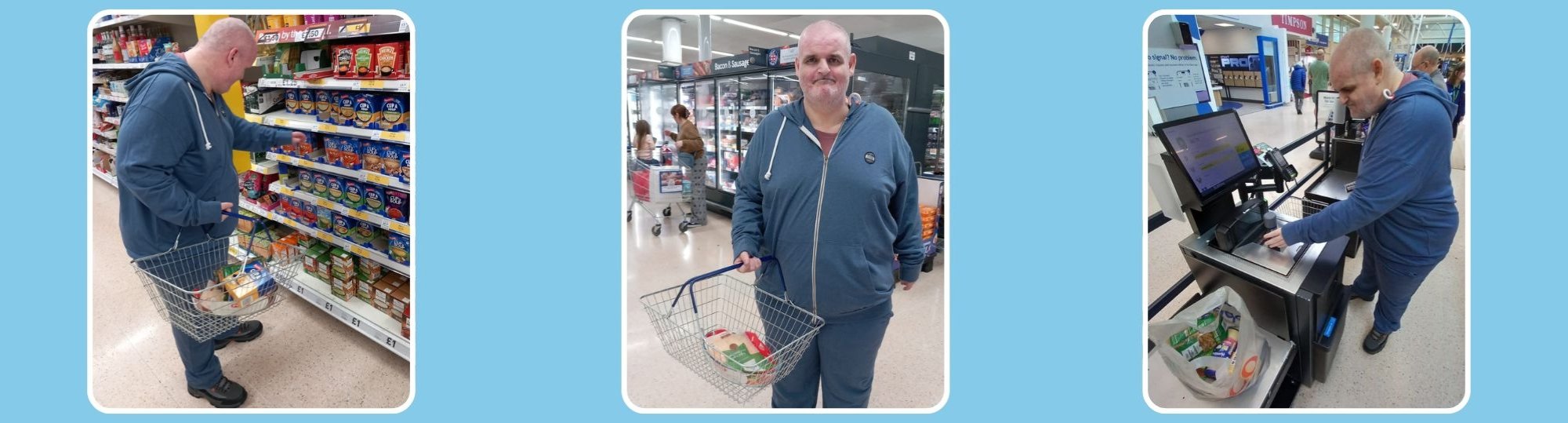
David has worked hard to take his life back after feeling trapped in his flat for years; here's how he worked with our Supported Living team, his social worker and other health professionals to get his health and independence back.
What changed the way David had been living?
Looking at David doing his own shopping and cracking jokes, you wouldn't guess he's spent ten years afraid to go out or let people in.
He was always really outgoing; he had a job and lots of people knew him as a regular at the local pub. Then someone he trusted in his personal life let him down and when Daivd didn't get the support he needed from his friends and family, he stopped trusting everyone.
David stopped wanting to go out, clean the house, shower, change his bedding or his clothes. His mistrust of the world grew so great that he wouldn't even let support workers into his home; he'd only let them to drop his shopping off at the door.
Because no one was coming in or out, things David let into his home stayed there and collected around him in bigger and bigger piles and it got harder and harder for him to do anything about it on his own. He was living on cereal, microwave burgers, fizzy drinks and milkshakes and staying up until the early hours, sleeping till the afternoon. The longer he isolated himself, the harder it got for him to let anyone in and his health started to deteriorate but he wouldn't see a GP or talk to anyone else who wanted to help.
Staff weren't sure how to support him; those key relationships just weren't working for David and new team members were introduced to him in summer 2025. They slowly encouraged him first to answer his door and then to talk to them. He gradually invited them into his home, first one room and then another as David grew more comfortable. They asked David about his life and what he wanted and then they started working together to achieve it bit by bit.
"I just kept showing up to show him that I'm here to support what he wants - to get out and do things. Over time he's accepted that", Mark said.
What happened when David started to trust other people again?
As David's relationship with support staff developed and they earned his trust, he felt better about people helping him clean his flat and sort out all the things that had accumulated in his home over the past decade. He started eating differently, getting a fresh food box delivered and then starting to leaving the house to go to different local supermarkets. Now he writes his own shopping lists and thinks very carefully about what he eats and drinks; he's lost 5.5 stone this year alone and it's important to him to keep going.
The length of David 's isolation showed in his reaction to these shopping trips; he was surprised to find that local buses are yellow now that they're part of the Bee Network and he had to learn how to use the self check outs.
He didn't have to manage any of this on his own though; support workers made sure he knew they were there for whatever he needed and that he tried every new thing right when he felt ready for it.
David 's trust began to fade again a few months later though, when the staff members he knew were asked to support someone else. His social worker was worried about his wellbeing, so they requested that the people who'd worked with him for several months came back to support him.
His confidence soon started to grow again; he enjoyed being in his garden again and he let even more people into his life to support him. At his first learning disability review, we realised David needed his eyes testing but instead of asking Specsavers to come to him, David went to them in person. He took the opportunity to go coat shopping and go to the bank too; his longest trip out so far. 'How did he feel afterwards?' we asked - he was 'knackered'. "I'm going to bed now to catch up on my beauty sleep", he said.
How is David's life changing now?
He's getting more confident in busy places now. When he went to buy hair clippers, first he said he didn't want to go into the busy shop, but then decided he would brave it so that he could choose a bird table too. He's feeling more confident about taking unplanned trips out now too; when his clock stopped, he arranged to go and buy more batteries that day.
When he felt ready to have a shower, he started by committing to once a week and he did it by himself. He soon decided to shower every other day and trusts staff enough now to feel comfortable asking for help when he needs it. He's taking pride in his home again too, offering his visitors a hot drink, helping to clean his home instead of watching others do it, changing his bedding regularly - and now he's learning to use the washing machine.
Losing weight and taking steps to look after his mental health mean David's happier to go out and meet people; choosing to share meals with his neighbours instead of eating alone. Now he's more like the David people used to know - making things happen, cracking jokes, getting out and about to Persona Your Voice meetings too.
David's looking forward too, growing confidence to be part of his community again and doing other things he's been missing out on. He's planning to do some gardening, redecorate his flat and he's going to get a club membership so he can play snooker every week. His GP visits every month and David's even feeling confident enough to agree to go to hospital for a scan.
The changes David's made to his diet and to his daily habits mean his health has improved. Conditions that could have made him poorly and perhaps even needing more future doctor or hospital visits are being managed, so he's in control of staying well, healthy and independent without his time being taken up with more appointments.
What made these changes possible for David?
All of this has been possible because people gave him the time and space to start trusting other people again, working with him:
Sometimes all we need to make a change is a reframe and having people around us who are confident about asking things in different ways, giving us space to open up. Supported by a team of people he clicked with and could learn to trust, David felt encouraged to do things and make changes but at his own pace. His support team say 'it's an absolute pleasure to work with him'.
Find out more about supported living here.